


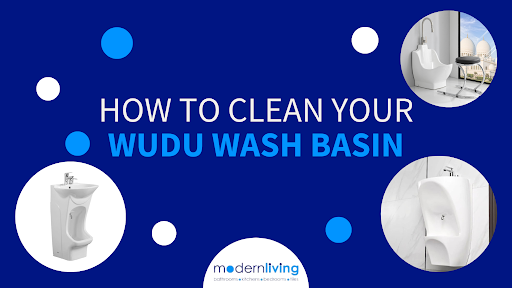
To prolong the life of your Wudu wash basin, wipe it down with a gentle detergent after every use. From there, a weekly deep clean will stop soap residue and sediment build-up and ensure it keeps working properly. But how does the long-term maintenance of a Wudu wash basin differ from day-to-day care? And how can you keep it functional for as long as possible?
What Daily Cleaning Does a Wudu Wash Basin Need?
On a day-to-day basis, you need to disinfect, rinse and wipe your Wudu wash basin dry. This routine is especially important for high-traffic areas, as bacteria, soap and dirt can build up quickly.
Wudu wash basins are usually made of high-grade porcelain, ceramic and 304 stainless steel. So, they are inherently relatively easy to clean. Their non-porous, smooth surfaces resist bacteria and standing water, making them straightforward to maintain. That said, the wrong products can still cause damage over time.
Beyond porcelain and ceramic, some Wudu wash basins are made from:
- Solid surface materials: a modern, fully non-porous finish that resists staining
- 304 stainless steel: suits commercial and high-traffic environments like mosques and schools.
Each material cleans slightly differently, but the core principles remain the same. Here is what a solid daily routine looks like:
- Wipe down all surfaces with a soft microfibre cloth or gentle sponge. This removes water spots, soap residue and mineral deposits before they harden. Avoid abrasive scrubbing pads as they scratch stainless steel and solid surface finishes permanently.
- Rinse and clear the drain at the end of each day. Check for visible obstructions and confirm water is flowing freely. Standing water leads to mould and odour fast.
- Disinfect high-touch areas like tap handles, buttons and seating, with a mild disinfectant or diluted white vinegar. If your Wudu sink has sensor taps, wipe the sensor eye with a damp cloth to keep it functioning accurately.
- Dry surrounding floors and walls. Splashed water around the basin causes mildew and creates slip hazards. In a mosque or shared space, this also maintains a clean, respectful environment for worshippers.
What Products Are Safe to Use on a Wudu Wash Basin?
The safest cleaners for a Wudu wash basin are pH-neutral, non-abrasive and fragrance-free. Standard bathroom sprays like Method or Ecover work well on ceramic and porcelain. For stainless steel Wudu sinks, diluted white vinegar cuts through water spots without damaging the finish.
Avoid the following:
- Bleach-based products: they discolour grout and degrade seals over time
- Abrasive powders or cream cleaners: they scratch ceramic, porcelain and solid surface finishes
- Acetone or solvent-based cleaners: they strip protective coatings from stainless steel
For stainless steel Wudu basins, always wipe in the direction of the grain. Wiping against it creates micro-scratches that dull the surface over time.
How Do You Deep Clean a Wudu Sink?
A weekly deep clean addresses the build-up that daily wiping misses. Soap scum, hard water deposits and limescale accumulate inside the drain and around tap fittings. Areas a quick wipe does not reach.
Follow these steps:
- Apply a descaling solution or white vinegar around the tap base and drain. Leave for 10-15 minutes.
- Scrub with a soft-bristle brush, paying attention to grout lines and around the waste fitting.
- Rinse thoroughly with warm water.
- Wipe the whole Wudu basin dry with a microfibre cloth.
- Remove and clean the drain cover or pop-up waste separately if your model has one.
Hard water is a practical issue for most UK properties. Around 60% of England is classified as a hard or very hard water area, (ScaleGuard). Limescale builds faster than most people expect. In high-use ablution spaces, descaling is not optional, it is necessary.
How Do You Prevent Limescale Build-Up in a Wudu Wash Basin?
Limescale is the most common long-term maintenance issue for any Wudu wash basin in a hard water area. The most effective prevention is drying the basin after every use. Standing water is where deposits form.
Beyond that:
- Install a water softener or inline filter on the supply to reduce mineral content at source
- Use a dedicated limescale inhibitor spray once a week
- Descale the tap aerator every month (it blocks quickly and visibly reduces flow pressure)
Browse our range of bathroom taps to find fittings that are easy to remove and clean regularly.
How Do You Maintain the Drain on a Wudu Basin?
The drain is where most blockages begin. Hair, soap and sediment collect in the trap and slow drainage. A slow-draining Wudu sink is both unhygienic and frustrating. Particularly in a high-frequency ablution area used multiple times daily.
Prevent blockages with these habits:
- Remove and rinse the drain cover weekly
- Use an enzyme drain treatment monthly (these break down organic matter without corroding pipework)
- Never pour thick soaps or oils directly down the drain
If drainage remains slow, remove the waste trap under the basin and clean it manually. It takes five minutes and resolves most blockages without a plumber.
How Often Should You Replace the Sealant Around a Wudu Wash Basin?
The silicone sealant where your Wudu basin meets the wall or worktop is one of the most overlooked maintenance areas. Mould establishes itself on degraded silicone quickly and once it sets in, cleaning alone will not shift it.
Inspect the sealant every three to six months. Signs it needs replacing:
- Black or grey mould spots that cleaning cannot remove
- Cracking, shrinking or visible gaps forming between sealant and surface
- Yellowing or brown discolouration
Replacing sealant is a simple DIY job:
- Remove the old sealant with a Stanley knife and sealant remover tool
- Clean the area with rubbing alcohol
- Apply mould-resistant bathroom silicone
- Allow 24 hours to cure before use.
What Is the Best Long-Term Maintenance Routine for a Wudu Basin?
The most effective long-term maintenance approach for a Wudu Basin combines consistent daily habits with scheduled maintenance. Here is a practical framework:
| Frequency | Task |
| After every use | Rinse, wipe and dry the basin |
| Daily | Disinfect handles and sensor taps; dry surrounding floor and walls |
| Weekly | Deep clean, descale, clean drain cover |
| Monthly | Descale tap aerator, enzyme drain treatment |
| Every 3-6 months | Inspect and replace sealant if needed |
This applies whether you have a single domestic Wudu basin at home or a multi-user Wudu sink in a mosque or workplace. The routine stays the same; the frequency scales with usage.
Thinking About Upgrading Your Wudu Wash Basin?
Consistent maintenance extends the life of any Wudu wash basin considerably. But if your current basin shows irreparable staining, persistent drainage issues or cracked glazing, replacement is the more cost-effective long-term decision.
Explore our full range of Wudu basins and Wudu sinks at Modern Living Direct. Designed for both domestic and commercial use, with nationwide delivery across mainland UK.
Got a question about the right Wudu basin for your space? Get in touch with our team.
You are also welcome to visit our Bradford showroom. No pressure, just honest advice.